Pickleball Paddle Embroidery Design Review
As someone who has spent years testing machine embroidery designs for both personal craft projects and commercial client work, I approach every new file with a critical eye. The latest trend in the Sports category is undeniably pickleball, and finding a design that captures the energy of the game without compromising stitch quality is a challenge. Today, I am evaluating the Pickleball Paddle Embroidery Design to see if it holds up under the pressure of real-world application. This isn't just about how the preview looks on a screen; it is about how this embroidery file translates into a tangible, high-quality finished product.
First Impressions: Mood and Visual Personality
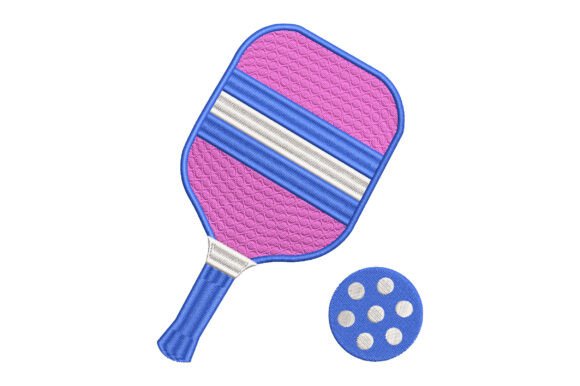
When I first opened the Pickleball Paddle Embroidery Design, the immediate impression was one of fun and kinetic energy. The layout features a detailed paddle crossed with a perforated ball, utilizing bold contours that suggest movement. For an Etsy seller or a boutique owner looking to tap into the current craze, the visual personality is spot on. It feels sporty yet playful, making it versatile enough for adult apparel or even a trendy nursery item for a young athlete.
The balance between the paddle's solid shape and the ball's texture is where the design shines. In digital previews, it looks clean, but my concern always lies in the transition from pixel to thread. The use of what appears to be a mix of fill stitch for the paddle face and satin stitch for the outlines suggests a professional finish. However, the true test comes when we consider the stitch density. If the density is too high, the fabric will pucker; too low, and the details will bleed through. From the initial review, the spacing seems reasonable, but this is something you must verify before committing to a large production run.
Real-World Application: From Tote Bags to Sweatshirts
To truly understand the value of this machine embroidery design, let's imagine a specific scenario. You are preparing a line of custom tote bags for a local pickleball tournament. These bags need to withstand heavy use and frequent washing while maintaining their visual appeal. Placing the Pickleball Paddle Embroidery Design on a sturdy canvas tote bag would likely yield excellent results. The flat surface allows the stitches to lay evenly, and the bold lines ensure the image remains recognizable even from a distance.
Now, consider moving this same design onto a fleece sweatshirt. Fleece has a nap, which can sometimes obscure fine details. Here, the "detailed" aspect of the paddle becomes a potential hurdle. If the thread colors chosen do not contrast sharply with the fabric, the intricate holes in the ball might get lost in the texture. For custom apparel like sweatshirts, I recommend using a darker background fabric with bright, contrasting threads to ensure the design pops. Alternatively, using a white underlay could help the colors stand out against dark garments.
For the craft business owner, this design also works beautifully as an embroidered patch. Creating patches allows you to control the backing and stabilizer more strictly than direct garment embroidery. You could produce a batch of these patches and sell them individually or sew them onto hats, backpacks, and aprons. This approach minimizes the risk of fabric distortion and ensures every customer receives a consistent, high-quality product.
Navigating Challenges: Fabric and Hoop Considerations
While the Pickleball Paddle Embroidery Design is promising, there are specific situations where caution is required. One major consideration is the hoop size. If the design is large, attempting to embroider it on a small cap front or a baby onesie could lead to registration issues or fabric bunching. Always check the dimensions of the digital embroidery file against your available hoop sizes. If the design exceeds your hoop capacity, you may need to resize it, which can alter the stitch count and potentially ruin the detail of the ball's perforations.
Fabric texture is another critical factor. On thin or stretchy fabrics like jersey knit, the weight of the stitching can cause significant distortion. Without the proper stabilizer, the edges of the paddle might curl, or the fabric might pucker around the dense areas. For baby embroidery projects, where softness is paramount, I advise testing the design on scrap fabric first. Ensure that the back of the embroidery does not feel stiff or scratchy against sensitive skin.
Furthermore, curved surfaces present a unique challenge. Embroidering this design on a baseball cap requires precise alignment. The curve of the cap panel can distort the straight lines of the paddle if the hooping technique is not perfect. In such cases, a specialized cap frame is essential. If you are working with layered garments or items that require frequent washing, ensure the running stitch and fill areas are secure enough to withstand agitation without unraveling.
Design Notes for Professional Results
Before integrating the Pickleball Paddle Embroidery Design into your portfolio or shop listings, follow these practical steps to ensure success:
- Test on Scrap Fabric: Never skip the test run. Stitch the design on the exact fabric and stabilizer combination you plan to use. Check for puckering, skipped stitches, or color bleeding.
- Review Thread Contrast: Experiment with different thread colors to see how they interact with light and dark backgrounds. High contrast is key for visibility.
- Inspect Small Details: Zoom in on the stitched sample. Are the tiny holes in the ball clear? Is the text legible if included? Sometimes, reducing the scale slightly can improve clarity by preventing thread crowding.
- Check Licensing: As a small shop product creator, always confirm the licensing terms. Can you sell the finished goods? Can you offer the digital product itself? Understanding these boundaries protects your business.
- Create Mockups: Use printable mockup tools to visualize the design on various products. This helps you and your customers understand how the final piece will look in context.
Impact on Brand and Customer Trust
Ultimately, the quality of your finished product defines your brand. A well-executed Pickleball Paddle Embroidery Design adds significant value to any handmade item. It signals professionalism and attention to detail, traits that build customer trust. When a buyer receives a personalized gift or a piece of holiday embroidery that looks crisp and durable, they are more likely to return for future purchases.
Conversely, a poorly executed design can damage your reputation. If the stitches are loose, the colors fade quickly, or the fabric is distorted, the perceived value drops instantly. By taking the time to evaluate the embroidery project thoroughly—checking the stitch density, selecting the right stabilizer, and choosing appropriate fabrics—you ensure that your work stands out in a crowded market.
For the creative entrepreneur, this design offers a fantastic opportunity to create personalized gifts that resonate with a passionate community. Whether it is a kitchen towel for a home player, a pillow cover for a fan, or a commercial embroidery piece for a club team, the versatility of this design is its greatest asset. Just remember to approach it with the same care and precision you would any high-stakes project. With the right preparation, the Pickleball Paddle Embroidery Design can become a staple in your collection, driving engagement and sales for your craft business.